
'This is no longer a single-hazard problem; it is a cascading, multi-hazard problem. A landslide never occurs in isolation. This entire chain is the cascading effect of what looks, at first, like a single disaster.'

India is hosting its first international para archery event, the third stage of the 2026 Hyundai World Archery Para Series, in Ahmedabad. The competition features 109 archers from 19 countries and serves as a crucial build-up to the Aichi-Nagoya 2026 Asian Para Games. World number one Sheetal Devi, along with other top Indian and international archers, will be competing for titles and world ranking points.

Two-time Olympic medallist PV Sindhu is set to chase an unprecedented sixth medal at the BWF World Championships, which are returning to India after 17 years, beginning in New Delhi on Monday. Sindhu, already a five-time World Championships medallist, is high on confidence after winning the Japan Open Super 750 last month.

It seems odd to criticise a country for delivering growth rates in standards of living and consumption that have been perhaps the fastest, longest, and most broad-based (affecting hundreds of millions of people) in history, points out Arvind Subramanian.

The Quad grouping has expanded cooperation in critical minerals and energy, while unveiling new measures to boost maritime surveillance and port infrastructure across the Indo-Pacific. This move comes against the backdrop of China's growing military posturing in the region, with ministers reiterating strong opposition to destabilising actions and expressing serious concerns over militarisation of disputed features.

A readout by the US said the agreement marked a milestone in the strategic partnership between the two nations to ensure that the foundational elements required for advanced technology and energy are available within trusted networks.

The unprecedented rally in artificial intelligence (AI)-linked stocks has led to Indian companies being excluded from the top 10 constituents of the MSCI Emerging Markets (EM) Index for the first time in over two decades, raising concerns about concentration risk.

Russian President Vladimir Putin stated that Moscow would not interfere in the "delicate" bilateral relations between India and China, expressing confidence in their ability to resolve border disputes amicably. He also discussed Russia's independent partnerships with both nations, touched upon India-Pakistan ties, and highlighted ongoing and proposed defence cooperation with India, including the BrahMos missile and a potential Su-57 fighter jet project.

The Chinese State-affiliated media outlet Global Times has accused the film of exaggeration and presenting a 'one-sided narrative' of the 2020 Galwan Valley clash between Indian and Chinese troops.

This might lead to a further outburst, flooding downstream if left unchecked.

'You have to get private investment to somewhere between 35% to 36% of GDP. It is hovering about 30%-31%.'

A massive flash flood originating in Tibet has devastated central Nepal, killing 17 people and leaving nearly 500 missing, including 105 Indians. The deluge, caused by a rock slide near the Nepal-Tibet border, swept through districts, washing away bridges and severely damaging at least a dozen hydropower projects.

'Being the defending champions certainly gives us confidence, but every Olympiad is a new event and starts from scratch.'

Russian President Vladimir Putin is set to visit China for talks with Chinese leader Xi Jinping, shortly after US President Donald Trump's visit to Beijing. The visit underscores the close strategic ties between China and Russia amid global tensions.

The US Senate has overwhelmingly approved a bill, the Lindsey O. Graham Sanctioning Russia and Iran Act of 2026, which aims to punish Russia and its major petroleum product buyers, including China and India. The legislation allows the US President to impose 100 per cent tariffs on goods from the top five importers of Russian oil and gas, and also extends sanctions on Iran's energy sector. The bill, championed by the late Senator Lindsey Graham, now moves to the House of Representatives for further approval.

The global artificial intelligence (AI) boom has significantly reshaped equity markets, with Taiwan surpassing India to become the world's fifth-largest stock market. India has seen its market capitalisation decline by 7% year-to-date, while AI-linked economies like Taiwan and South Korea have surged.

A new study suggests that airborne micro- and nanoplastic particles may contribute to global warming, potentially accounting for over 16 per cent of the impact of black carbon.

'Wages have not risen. Rural wages have stagnated. The growth was 0.7 per cent last year. For casual and irregular labour, the wage growth is negative.'

US President Donald Trump met with Chinese President Xi Jinping in Beijing to discuss trade, technology, Taiwan, and the Iran war. Xi Jinping said that 2026 will be a 'historic, landmark year' for China-US relations.

'Even if the war ends tomorrow, which is unlikely, and we go back to the pre-war status quo, the world will still need some time to get over the sudden shock of oil price increases.'

A new report suggests China's maritime vulnerability lies in the Strait of Hormuz, not Malacca, creating strategic competition in the Indian Ocean.

Tech giant Apple reported a record June quarter revenue of USD 109.4 billion, a 16 per cent year-on-year increase, with significant double-digit growth in emerging markets like India. However, the company anticipates business risks in the coming quarters due to rising memory chip prices and ongoing supply constraints.

Skoda Auto is strategically navigating the competitive Indian automotive market by prioritising profitable growth, exploring new powertrain options like CNG and a limited diesel return, and gearing up for a locally produced electric SUV, all while expanding its retail footprint.

Haryana Chief Minister Nayab Singh Saini met with a World Bank delegation to discuss advancing Artificial Intelligence, digital governance, and skill development in the state. The discussions focused on leveraging technology to enhance citizen services, with plans to showcase Haryana's AI Sandbox globally and develop a dedicated AI model for the state.
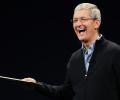
Apple CEO Tim Cook's strategic pivot, from initial rejections to local partnerships and leveraging government policies like PLI, transformed India into a major iPhone manufacturing and export hub, now accounting for one in every four iPhones assembled globally.

Despite decades of efforts towards energy transition, oil will remain the critical energy source for all nations for some decades. We can hope for peace opening the Strait of Hormuz, but must prepare for war closing it, points out former foreign secretary Ranjan Mathai.

China has welcomed the appointment of Vikram Doraiswami as the new Indian Ambassador, expressing optimism for improved Sino-India relations. Doraiswami, a seasoned diplomat with experience in China, is expected to play a key role in managing complex bilateral issues and fostering cooperation.

Astronaut Shubhanshu Shukla discusses the Gaganyaan mission and its potential to inspire other nations in space exploration, drawing on his experiences as an IAF test pilot and his time on the International Space Station.

Christopher Wood, global head of equity strategy at Jefferies, warns that cheaper Chinese artificial intelligence (AI) models could lead to 'massive capital destruction' in US markets, highlighting the rapid growth of Chinese LLMs and the increasing debt funding for AI capex in the US.

Indian archer Sahil Jadhav, preparing for the Asian Games, has found valuable insights into managing pressure and staying focused from former Australian cricketer Shane Watson's self-help book, 'The Winner's Mindset'.

New Delhi must look for formal, institutional statements issued directly from Washington rather than rely on casual pronouncements meant for local audiences, notes Ambassador Rajasekhar.

A search and rescue operation is underway for at least 10 climbers, including renowned Nepali mountaineer Nirmal Purja, who are missing on Pakistan's Broad Peak following a suspected avalanche on Thursday.

'It's very important for India to retain its sovereignty. India should not sign any agreement which compromises its sovereignty.'

The All India Football Federation's decision to field two separate teams for the inaugural FIFA ASEAN Cup and an international friendly against Brazil has sparked controversy.

Millions of soccer fans in the world's two most populous nations may not be able to watch the World Cup that starts next month, due to a deadlock over broadcast rights in India and no official decision in China.

Trade negotiations between the United States and Canada have collapsed, leading to the US imposing 50% tariffs on nearly $28 billion worth of Canadian imports, with Canada immediately vowing to retaliate dollar-for-dollar.

Ayush Shetty, Unnati Hooda, Simran Singhi, and Kavipriya Selvam are set to make their BWF World Championships debut as India hosts the prestigious badminton event after 17 years, offering a significant platform for these rising stars.

Beijing has been wary of Sanae Takaichi's efforts to boost Japan's military profile since taking office six months ago, points out Dr Rajaram Panda.

A parliamentary panel has strongly recommended that the Indian government appoint a dedicated 'polar ambassador' to enhance its strategic engagement and diplomatic influence in the critical Arctic and Antarctic regions, aligning with global trends and India's growing focus on polar affairs.

From the record-breaking Dangal to the divisive Bawaal, here's a look at Nitesh Tiwari's five films ranked from worst to best.
